
Fellows
We are excited to announce the second round of recipients of a JUNIPER Fellowship. The fellowship is available for up to two years and is aimed at supporting early career epidemic modellers to develop leadership skills and grow their research network as they transition to becoming an independent researcher.
New 2026 Cohort

Fanny Bergström — New 2026 cohort
Fanny is a postdoctoral researcher in mathematical epidemiology at the Mathematical Institute, University of Oxford, where she works on highly pathogenic avian influenza in Great Britain. Her research draws on stochastic modelling, Bayesian inference, and computational statistics to guide decision-making during outbreak response and to inform animal and public health policy. Fanny completed her PhD in computational mathematics at Stockholm University, and previously worked at the Karolinska Institute and at the European Centre for Disease Prevention and Control.
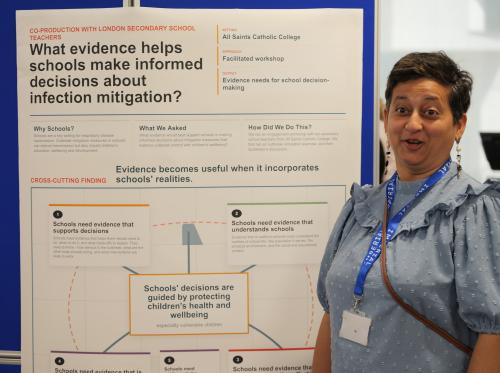
Sangeeta Bhatia — New 2026 cohort
Sangeeta Bhatia is a research fellow at the Department of Infectious Disease Epidemiology, Imperial College London. The focus of her research is using data to generate evidence relevant to public health policy. She is particularly interested in the policy questions that arise during infectious disease outbreaks, and a large part of her research has focused on these. The unifying theme across her varied projects is an interest in identifying and addressing evidence gaps so that public health decisions can be informed by the best available evidence. She also has a background in software engineering and is committed to the principle of software as a research artefact.

Zixuan Liu — New 2026 cohort
Zixuan is a postdoctoral researcher in Artificial Intelligence for Collective Intelligence Hub. His research focuses on spatial and spatiotemporal methods for infectious disease modelling, forecasting, nowcasting, anomaly detection, and public health decision support. He is particularly interested in using machine learning and epidemiological models to understand how outbreaks spread across locations, recover underlying spatial structure from epidemic data, and support real-time preparedness and response. His broader research experience includes collective decision-making under uncertainty, multi-agent systems, evidence fusion, and the development of practical decision-support tools.

Alin Morariu — New 2026 cohort
Alin is a research fellow in statistics at Lancaster University. His research focuses on developing Bayesian inference methods and computational frameworks for stochastic infectious disease models. He is interested in using high-performance computing and open-source software development to make Bayesian methods more accessible within epidemiology.
Going forward, he will focus on integrating deep learning models within inference pipelines, to accelerate model calibration across a wide array of Bayesian approaches, including MCMC, ABC, and filtering methods.
Previously, Alin did his PhD at Lancaster University, where he worked on spatial modelling of avian influenza and was a core developer of the Python library gemlib.

Daniel Pan — New 2026 cohort
Daniel Pan is an NIHR academic clinical lecturer at the University of Leicester and an honorary specialist registrar in infectious diseases and general internal medicine at University Hospitals of Leicester NHS Trust. His research focuses on respiratory-virus transmission and the development of clinically useful measures of individual infectiousness. He combines prospective clinical studies, laboratory sampling and epidemiological analysis to investigate how viral kinetics in the respiratory tract and exhaled breath relate to onward transmission. He has led large field studies of SARS-CoV-2 among healthcare workers, households and hospital patients, with his work extending to influenza, respiratory syncytial virus and measles. A parallel strand of his research examines ethnic inequalities in infection risk and the structural factors shaping exposure.
Daniel is particularly interested in bridging clinical infection research and mathematical modelling: designing model-ready clinical studies, improving estimates of infectiousness and transmission, and translating model outputs into decisions on testing, isolation, vaccination, antiviral treatment and infection prevention.

Thomas Rawson — New 2026 cohort
Thom Rawson is a senior researcher at the Leverhulme Centre for Demographic Science, University of Oxford, where he leads a research agenda on how demographic change reshapes the spread of disease and the subsequent changing demands of health services. During the COVID-19 pandemic Thom worked in Imperial College London's real-time COVID-19 modelling team, providing regular projections to SPI-M-O and supporting the government response, for which he received a Modelling and Data Support Award. He has also worked on modelling a broad spectrum of other diseases, including H5N1 avian influenza, and led retrospective policy studies on topics such as UK vaccine dose-interval protocol and the socioeconomic drivers of COVID-19 transmission across England. He is also a keen science communicator, translating the work of his wider research groups into public-targeted activities, podcasts, and video shorts.
2025 Cohort

Emilie Finch — 2025 cohort
Emilie is a postdoctoral researcher in the Pathogen Dynamics Unit at the University of Cambridge. Her research focuses on developing mathematical and statistical models to understand the drivers of arboviral transmission, assess future epidemic potential, and evaluate the impact of interventions. She is particularly interested in understanding the role of immunity, climate and behaviour on outbreak dynamics, and her current work involves modelling vaccine and Wolbachia-based strategies for dengue control. She previously completed a PhD at the London School of Hygiene and Tropical Medicine and also worked for the UK Health Security Agency modelling team.

Joe Hilton — 2025 cohort
Joe Hilton is a research fellow in mathematical modelling at the Manchester Centre for Health Economics (MCHE) within the University of Manchester, with a background in infectious disease epidemiology. He is interested in the role of population heterogeneity in different aspects of public health, ranging from household-level patterns of viral transmission to risk-stratified screening and treatment programs for non-communicable diseases. His research includes case studies of specific diseases, outbreaks, and policies, as well as methodological work focused on developing new techniques for modelling and inference, with a focus on stochastic processes and Bayesian statistics. A key component of Joe’s role within MCHE is to bridge the gap between health economics and mathematical epidemiology, both by developing new standards for simulation and uncertainty quantification in health economic analyses and by bringing economic insights about the value of interventions and information into the study of infectious disease control policies.

Katharine Sherratt — 2025 cohort
Katharine Sherratt is a research fellow at the London School of Hygiene and Tropical Medicine. Her research is on real time analysis and modelling during public health crises with a particular focus on rapid evidence synthesis and methods for evaluating the quality and impact of modelling work. She is particularly interested in developing and evaluating collaborative “team science” approaches to modelling work during infectious disease outbreaks. Previously Katharine worked at the Wellcome trust before training in epidemiology. During the COVID-19 response, Katharine contributed to the UK’s Scientific Advisory Group for Emergencies and developing modelling infrastructure for the European Centre for Disease Prevention and Control.